Showing posts with label music. Show all posts

Friday, 13 July 2018

On Arcadia


Hotfoot from viewing new documentary film Arcadia, some initial thoughts on what seems quite a zeitgeist-y piece of work for those in the landscape/ place bubble.

Directed by Paul Wright, the film is constructed from digitised footage in the BFI National Archive inter-cut with fictional excerpts from cinema and television.* An 'old-weird-Britain mash-up' of imagery swirling around the last hundred years that hangs on the directors wish to explore 'how we connect with the land around us and with each other'. Adrian Utley of Portishead and Goldfrapp's Will Gregory provide the soundtrack, pulsing audio-cue's amongst the visual montage, recalling British Sea Power's work for From the Sea to the Land Beyond. Here and there the spectral folk voice of Anne Briggs melts and distorts into the mix.

The narrative, such as it is, rests on a journey through the seasons; but this is a loose story, and all the better for it. A lack of intruding commentary also gives the footage space to tell a story, gifting the watcher's imagination permission to roam. Paul Wright has explained how atmospheres, ideas and themes for each 'season' underscored the search through the deep and rich archive sources, though the aim was often to seek out material 'that you wouldn't expect to be in a film about the British countryside.' This cut-up approach reflects the director's desire to create sensory experiences through image and sound rather than a straight-forward linear narrative progression. As such, comparisons have been made with Godfrey Reggio's Koyaanisqatsi and Powaqqatsi films scored by Philip Glass. Common ground can also be found with the Robinson films of Patrick Keiller. Political or politicised questions of society's relationship with the land and nature, of identity, of class are surfaced but this is no polemic, it is left to the viewer to piece together their own interpretation. A point to return to.


Arcadia has been positioned as a 'folk horror' artifact, part of a fecund wyrd Britain arcania that has come out of the long shadows to be part of the contemporary landscape vibe. Although the film has deliberately avoided using some of the more obvious and over-exposed reference points such as The Wicker Man, the folk horror genre is certainly well-represented through haunting imagery of bodies rising from the grave in Requiem for a Village and the like. Also present are snatches of the frankly strange folk rituals on display in a highly-recommended previous BFI crate-digging exercise, Here's a Health to the Barley Mow  

As for my own feelings on viewing the film, an initial reaction was that it was following a rather hackneyed trope of contrasting modern dystopian imagery with a seemingly idyllic past, but as the temporal contrasts progressed and mingled a more nuanced and muddied picture emerged. All to the good. This is what history shows us. Processes and patterns of change - in life, society, the landscape - are complex, contradictory and unexpected, hard to pin down, especially when you are in the moment. Humanity may well be experiencing a long fall, unable now to stop a self-inflicted wrecking ball from wiping out civilisations and eco-systems. This may be already happening; we know we can do better. But we can't really know what the future holds: what great and terrible prospects and unforeseen technologies and events will come to pass. 

Many of the visions of sunlit unchanging rurality that front-load the film are pure mid-twentieth century propaganda. Much of it would surely have looked archaic (though perhaps reassuring) to contemporary viewers. Yes, those children playing cricket on the village green look innocently happy, but kids were still dying of TB and suffering from rickets; the coming welfare state desperately needed. The countryside looks ravishing and immutable, but it always does in sun-bleached black and white. Captured on these early reels was a receding world. The farm labourers were already a dying breed and, in truth, their forebears had suffered untold ructions and dislocations over centuries past. Things had been so stable and orderly in the Victorian English village that many could not wait to defect to the foul, teeming rising cities of wages and freedom or endure harsh journeys to the unknown potential of the colonies (or had no other choice).   


The juxtapose of old and new tempts another thought: that folk rituals, hippy happenings, raves, music festivals and other raged communions with nature all share a common wealth through the ages; psychic (or psychedelic) portals out of normality. Echoes of a Merrie England always on the margins, dangerous and under threat. The past may be gone but it can punch through time, revived or repurposed into something new but familiar, even if we don't realise it. That's how history rolls. Same old wyrd magic, same old shite.  

Many a paradox here, but then the English vision of arcadia was always conflicted. As Adam Nicholson has chronicled, Renaissance England 'dreamed of a lost world, an ideal and unapproachable realm of bliss and beauty'; a seeking of 'the perfect interfolding of the human and the natural' as perceived in Classical pastorals. Nicholson characterises this movement as at once a search for the simpler Golden Age of ancient Sicily and Greek Arcadia - a longing underpinning many subsequent counter-cultures - whilst also being inherently conservative and elitist, raging against the forces of modernity: 'a dream of nature' though one exclusive to a rich squirarchy, heavily mediated and manipulated. A forgotten idealism which flowered but was then crushed by a brutal civil war. 

The visceral sonic and visual representations crackling through this film aptly show how the search for Arcadia has always been mixed-up, conflicted and probably doomed. 

An afterword on the recent Twitter squall on the Paul Kingsnorth's essay written to accompany the release of Arcadia. The piece, criticised for pandering to re-emerging 'blood and soil' nationalism, seems to have disappeared from the web, but a couple of Twitter responses to it and the author's 'open letter' reply posted on his website can be seen below. My own initial take was that, having previously admired Paul's non-conformism (and writing), these are dangerous Brexit-cult times in which to express sentiments that could be interpreted as mystical English exceptionalism. This may be a bit alarmist (Hell, Gareth Southgate may even come riding over the hill to show us a new more-inclusive path to Eden!). Anyway, have a read of both sides of the story and see what you think ...


 * The archive films which are utilised are listed on the Arcadia website.  


Tuesday, 17 April 2018

Pagan sampler interlude

New substantive post on the way soon, an archaeology of walking; in the meantime here's a musical interlude, some post-Easter pagan and animist sounds.

Trembling Bells - Christ's Entry Into Govan


Goat - Let It Burn


Mandy Morton and Spriguns (Spriguns of Tolgus) - Witchfinder


Erland Cooper - Solun Goose

Thursday, 4 January 2018

Pathways through long winter days until bright Phoebus shines down again


A quick ramble here through an assemblage of mid-winter cultural highlights. If record shops are a species indicator of a civilised polis (which they surely are), then it was good to have affirmation that the force remains strong in Bristol with the opening of a new Rough Trade store. A first wander around the racks yielded Bright Pheobus, songs by Lal and Mike Waterson, newly re-released on vinyl. Its 'lost folk-rock classic' story is unfurled in sleeve notes by Pete Paphides largely replicated in a Radio 4 documentary. Featuring Richard Thompson, Ashley Hutchings and a seemingly endless cast of early 70s electric folk, Bright Pheobus has joined the ever-replenished cast of misunderstood or under-marketed records of the time which have resurfaced, championed anew. A highlight for me is the track, Child Among the Weeds, featuring Lal Waterson and Bob Davenport's extraordinary, unrestrained vocals.


The post-war folk music revival is not covered by Steve Roud's magisterial (i.e. dauntingly massive) Folk Song In England, but I will try and persevere with this sweeping history of, well folk song in England. A chapter on sea shanties is included, a sound brought to vivid life by a communal sing-along with Halifax's finest renderers of whaling song, Kimber's Men, upstairs at The Greenbank, Easton in November. Other reading matter on 'the book pile' comes in the form of the multitude of pagan arcania found within the pages of Folk Horror Revival: Field Studies and the no-less fascinating A Natural History of the Hedgerow by John Wright. The 'folk horror' label perhaps encompasses Ben Myers The Gallows Pole, which I enthusiastically reviewed earlier in the year and remains a favourite recent fiction read.


Elsewhere on BBC radio, The Drover's Path fitted the bill as a suitably wintry Christmas Eve ghost story, Nick Luscombe presented Radio 3's Late Junction's favourite albums of 2017 and there was a gripping dramatisation of Neil Gaiman's refreshingly non-standard fantasy Anansi Boys, starring Jacob Anderson, Grey Worm from Game of Thrones; a Season Six box set of which was my Christmas guilty pleasure. Robert Macfarlane's #TheDarkIsRising Twitter-athon led to another gem from the BBC radio archive, a 1997 adaptation of Susan Cooper's midwinter classic chronicling a duel between the Dark and the Light across snowy Sussex downland. The ubiquitous (in a good way) Mr Macfarlane also brought forth his importantly beautiful collaborative work with artist Jackie Morris, The Lost Words; if ever there was an example of a Christmas present bought for your child that would give as much pleasure to the giver as the receiver, then this was it.


Fly bird fly on your raven wings
Take to the sky and sing for the love of wheeling and turning

These words, images and songs spun around my head as a post-Christmas walk around YGrib, Waun Fach and Pen Trumau in the post-snow, but still frozen, western Black Mountains literally blew the cobwebs away; awaiting the days when bright Phoebus will shine down again. 


Tuesday, 21 March 2017

Chuck Berry - Promised Land: rock and roll topography


Chuck Berry at his topographical best, using tight wit and pathos to describe an epic journey by bus, train and aeroplane from Virginia to California in 'Promised Land':

I left my home in Norfolk Virginia
California on my mind
I Straddled that Greyhound,
and rolled in into Raleigh and all across Carolina

Stopped in Charlotte and bypassed Rock Hill
And we never was a minute late
We was ninety miles out of Atlanta by sundown
Rollin' out of Georgia state

We had motor trouble it turned into a struggle,
Half way 'cross Alabam'
And that 'hound broke down and left us all stranded
In downtown Birmingham

Right away, I bought me a through train ticket
Ridin' cross Mississippi clean
And I was on that midnight flier out of Birmingham
Smoking into New Orleans

Somebody help me get out of Louisiana
Just help me get to Houston town
There are people there who care a little 'bout me
And they won't let the poor boy down

Sure as you're born, they bought me a silk suit
Put luggage in my hands,
And I woke up high over Albuquerque
On a jet to the promised land

Workin' on a T-bone steak a la carte
Flying over to the Golden State
Oh when The pilot told me in thirteen minutes
We'd be headin' in the terminal gate

Swing low chariot, come down easy
Taxi to the terminal zone
Cut your engines, cool your wings
And let me make it to the telephone

Los Angeles give me Norfolk Virginia
Tidewater four ten O nine
Tell the folks back home this is the promised land callin'
And the poor boy's on the line

Thursday, 5 January 2017

New Paths to Helicon Part 1


New Paths to Helicon Part 1, sublime dread from Mogwai juxtaposed with footage from US atom bomb testing in Nevada (via zootelevizor/ YouTube)

And if you survive this, then try the My Bloody Valentine remix of Mogwai Fear Satan. Happy New Year!

Friday, 11 March 2016

Landscapism dispatch #1

Bloody hell! A PhD takes over your life. Expansive blog posts unrelated to my PhD research are probably going to be few and far between over these three years. So landscapism dispatches will have to be brief; no bad thing. 


A good number of interesting things have been kindly brought to my attention or stumbled across already this year, and here is something of a cartulary (damn, can't shake off my research head!).  


As soon as I finish reading Rob Cowan's excellent Common Ground (a distinctive voice in the somewhat crowded territory of 'New Nature' writing) I hope to plunge into From Hill to Sea; the work of the ever-engaging Fife Psychogeography Collective in book form. Those Fifers know how to find the strange brew that soaks the hills and flows to the sea in their kingdom above the bridge.

"And I rose up, and knew that I was tired, and continued my journey”. Artist and composer Martin A. Smith has produced a new film, Secretly sharing the landscape with the livingexploring part of the Icknield Way in Buckinghamshire, following in the fecund footsteps of Edward Thomas:


You can find out more about Martin's work here.

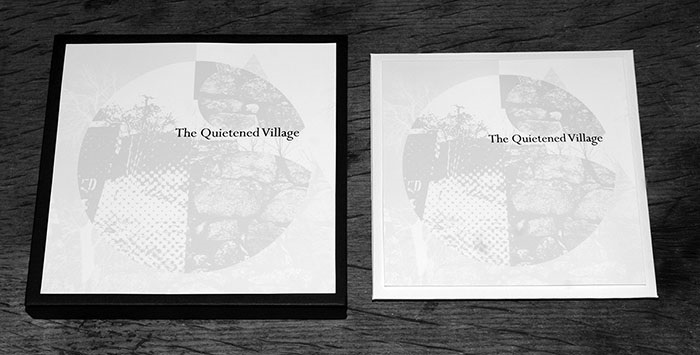
The daily on-line posts from A Year in the Country provided twelve months of eclectic imaginings on the unsettled bucolic a while back and in April comes an album of sonic accompaniment featuring a goodly mix of collaborators, The Quietened Village: "a study of and reflection on the lost, disappeared and once were homes and hamlets that have wandered off the maps or that have become shells of their former lives and times".


Further audio reports from the landscape edge come in the shape of Justin Hopper's poetry and sound project, I Made Some Low Enquiries, featuring none-other than folk legend Shirley Collins and available from the English Heretic website.


Radio has become my day-time company in recent months, through the fountainhead that is BBC iPlayer. Melvyn Bragg curating In Our Time, 6 Music's Freak Zone, Radio 4's aurally-charged production of The Stone Tape, Late Junction eclectica on Radio 3, The Children of Witchwood and old Sherlock Holmes episodes on Radio 4 Extra; the list goes on. Current enjoyment is provided by music journalist Laura Barton's exploration of the relationship between landscape and music across the British Isles in her Radio 4 documentary series, as described further here.


The music of the crags and cliffs of Red Daren and Black Daren is a song of stone. Here in the Olchon Valley is found the geological rim of England as western Herefordshire sheds its Anglo-Saxon facade and bleeds into the Black Mountains of Wales. A recent Sunday morning jaunt amongst the Old Red Sandstone passed through this hushed borderland, climbing to the Hatterall ridge; Hatterall, perhaps, bastardised from At y Heu: 'towards the sun'.   


And back home the summit of my books to read mountain has moved further out of reach with the addition of Time's Anvil: England, Archaeology and the Imagination by Richard Morris, Bloody Old Britain by Kitty Hauser, Anna Pavord's Landskipping, John Lewis-Stempel's Meadowland and The Buried Giant by Kazuo Ishiguro.

Right, back on the Monk's Trod now for me.

Tuesday, 27 October 2015

Songs of runaway dreams miles away


Directionless wandering reveals another street of once-red brick terraced houses. Its not raining, exactly; but it has been. This could be Middlesbrough or Rugby or Dumbarton or Edmonton, could be Derby or Barrow or Kilmarnock, Pontypool or Bridgewater. The vociferous industry and municipal certainty that paved the fields and marshes over has drifted away. People round here are dispersed. These streets seem tired now, stranded.

Stranded.

Seven long years since I passed these gates/
Fighting for our king, don't know why, couldn't say/
And you don't want to cross me, I'm here to stay/
I'm going back to Hocken's Hey

Sometimes I think about the world/
Sometimes I think about the world outside

The world outside.

By Los Angeles standards West Adams is old, an antique neighbourhood. Mostly shabby now, hemmed in by freeways; but Little Richard was a resident, so too Ray Charles and Joe Louis. Back in the day. Arthur Taylor Lee and Johnny Echols met at high school here, formed a band. 1965 and The Grass Roots become Love. 1967 and hardly anyone buys Forever Changes; its a masterpiece.

This is the time and life that I am living/
And I'll face each day with a smile/
For the time that I've been given's such a little while/
And the things that I must do consist of more than style/
There are places that I am going

Places that I am going.

Sometimes I think about the world outside.

Michael Head is thinking about the world outside. He's on a different West Coast, but he gets Arthur Lee and he gets Love. His town has those murky red brick streets but it can also be technicolour: ask John Lennon, ask Julian Cope, ask Lee Mavers, ask Michael Head.


1997 and Michael makes a record with his brother John. The result is an alchemistic soundscape, juxtaposing inner-city drug dependency with pastoral folk that conjures visions of Middle Age sail-makers, travelling knights and harvest workers; mining the spirit of Arthur Lee and Love. Its awash with hope and melancholy. Hardly anyone buys The Magical World of the Strands; its a masterpiece.

Our village has seen your village from a distance/ 
Travelling through the waves/ 
Through fields of uncertainty/ 
Runaway dreams miles away


Runaway dreams miles away.

There are places that I am going.

Stranded? This record has always taken me away, in times when I was walking those red brick streets, metaphorically or in reality. It takes me to the greenwood and the old world, takes me to Mojave and Sierra Nevada in the new world; to wherever I want to be. Its as English as oak, as Californian as Laurel Canyon; its as urban as the decaying brick walls of terraced streets, as bucolic as dusk on a summers day.


These have been some hasty reflections on a record that is particularly important to me; a welcome distraction from the structured reading, writing and thinking of my PhD literature review.

The Magical World of the Strands has recently been re-released and you can find out more about it on the Shacknet web site. An album of outakes and demos, The Olde World is due for release soon.

My advice is to seek out both and anything else by Michael Head's other bands, The Pale Fountains, Shack and The Red Elastic Band. And, of course, the records of Arthur Lee and Love.


Thursday, 2 July 2015

The Way of the Hollow


The work of something of a topographical supergroup, Holloway, is a collaboration between Adam Scovell (film and direction), Robert Macfarlane (words and voice-over), Richard Skelton (music) and Stanley Donwood (artwork).

Robert Macfarlane describes the films genesis and production on the Caught By The River website; its stylistic debt to Derek Jarman's 1971 Journey to Avebury Super-8 short acknowledged and plain to see.

The film moves across many of the touchstones of the re-imagined sense of landscape and place outlined in my recent Towards a new landscape aesthetic essay. And chances are there will be such a holloway - a secret sunken path - within a few miles of where you are sitting right now, so away into the gloaming and find your own layered and folded place...


Thursday, 12 March 2015

Light the paths you want to roam


Well I'm going

Back to the country

Up on the mountains

Up on the rising side

(Street Song - Thirteenth Floor Elevators)


Wednesday, 4 March 2015

A Skin Too Few: The Days of Nick Drake


I've recently watched A Skin Too Few: The Days of Nick Drake, Jeroen Berkvens' 2002 documentary that I came across via the Dangerous Minds web site. Like his music its gentle and melancholic, with contributions from his family, friends and fellow musicians. One key voice is Joe Boyd, who produced all three of Drake's albums, the meagre sales of which on release surely contributed to his untimely death at the age of 26. In his memoir of the folk-rock scene of the late 60s and 70s, White Bicycles, Boyd asks: "As the sixties drew to a close, who would have predicted that the end of the millennium would see Nick's music so much more prominent than that of the Incredible String Band, Fairport Convention, John Martyn or Sandy Denny?"    

I was particularly taken by the opening aerial footage of the countryside around his home village of Tanworth-in-Arden. For some reason it had not occurred to me before that this was only a few miles westwards across Warwickshire from Kenilworth, the town where I spent my childhood. Warwickshire is one of those Midland England counties that its easy to overlook: overawed and torn asunder by Birmingham and Coventry at its northern edge, in the shadow of Costwoldian Arcadia to the south. But linger along its tree lined lanes, forded streams, stout middling sort farmsteads and undulating fieldscapes and Warwickshire is quietly memorable and substantial, much like Nick Drake's music. This is, after all, the Forest of Arden of Shakespeare's As You Like It. Here is the full 48 minute film to enjoy:


Rob Young articulates well why Drake has such a hold on those of us (legion now, sadly pitifully few when he was alive) who find his music a particular touchstone for English pastoral melancholia in his treatise on Albion's soundscape, Electric Eden: Unearthing Britain's Visionary Music:
"A former friend and musical partner, Ross Grainger, described Drake as a 'modern pagan' long after his death, recalling conversations about Gaia theory, Stonehenge, ley lines and supernatural forces. Drake's songs may be full of natural images - rain, sun, moon, sky, ocean, sand, trees, roses, thorns etc. - but nature was no panacea either. For Drake, human fate was linked to the relentless round of the seasons - summer bliss must shade into autumnal age and regret; then comes the killing winter. His songs trace eternal cycles, natural revolutions, the turning of the year and the seasons, but with an awareness that repetitive motion can become a treadmill."  

At some stage, when I have managed to justify the outlay as necessary cultural enrichment, I hope to buy a copy of Nick Drake: Remembered For a While, the recently published Drake compendium and artifact. Andrew Ray provides a good flavour of the book on the Some Landscapes blog.

In the meantime, here's a mystical, bosky version of The Cello Song, recorded for the John Peel 'Night Ride' session in August 1969, in which to bask and be transported to the Forest of Arden at dusk, in the company of Orlando and Rosalind, Corin and Silvius:


Tuesday, 13 January 2015

Sharron Kraus - Pilgrim Chants & Pastoral Trails


Cold and damp January days require an appropriately melancholic soundtrack and I've recently been enjoying Pilgrim Chants & Pastoral Trails by a new find, Sharron Kraus. Sparse and, dare I say, ethereal, the album is inspired by the landscape of the Elan Valley in Mid-Wales, a place to which Kraus regularly returns and feels a longing for whenever she is away: hence the naming of the first track, Hiraeth, the beautiful Welsh word for the call of the land. Of recording the album in the valley, Kraus states that "I feel like I've travelled back in time - into my own memories and into the past - or into a land of faery". The titles of the other tracks, some including field recordings of birds, streams, waterfalls, wind and rain, continue this sense of place and memory:


Rowan
Cadair Idris
Candlemas Moon
Winding Road
Dark Pool
Y Fari Lwyd
Farewell 


According to Kraus' web site, "As well as drawing on the folk traditions of England and Appalachia, her music is influenced by gothic literature, surrealism, myth and magick". Alongside another current folk favourite similarly inspired by the landscape and folklore of rural, upland Wales, Tincian by 9Bach, this sounds good to me. I look forward to discovering more of these sounds - of dulcimer, drone, recorder and harp - with echoes of the American psych-folk of the likes of Espers and Richard Skelton's and Autumn Richardson's landscape-inspired music, words and imagery.

Saturday, 1 November 2014

The Incredible String Band - Be Glad For the Song Has No Ending


It would seem appropriate to usher November in with the autumnal melancholic strangeness of the Incredible String Band, via a suitably idiosyncratic documentary called Be Glad For the Song Has No Ending.

A first reading of The Incredible String Band would lead to the conclusion that they embody every cliché of psychedelic-folk-world music-lentil inflected-commune living-naïve mystic hippydom. This film may not dispel that thought. I, however, would concur with Rob Young’s view that more than any other band of the pivotal late 60’s/ early 70’s epoch they “captured that elemental essence of music as an intimate rite in the flickering light, imparting sacred mysteries to rapt ears in the sapphire deep of night … the music consumes everything thrown into it in a blaze of inspiration.” To me their sound and imagery conjure thoughts of damp leaf-litter strewn woodland walks, candle-lit fireside chattering, seasonal folkloric ritual and my meadow-bound childhood roamings; sonic transportation to place and time rememberings.

I know nothing of the films origins and do not feel compelled to find out; I would simply recommend that you watch it and, if you are not already a devotee, seek out their unique music. 


Monday, 29 September 2014

Goat, Sweden and psychedelic genius loci


A little off the Landscapism beaten path this one. I spent the early hours of Sunday morning with 1,500 like-minded souls crammed into an old warehouse in Liverpool’s Baltic Triangle, adjacent to the dock where 18th century whaling ships landed their cargoes, watching a pulverising performance by a modern day Scandinavian force of nature, the Swedish psych-collective, Goat.
    
Seemingly arriving out of nowhere in 2012, Goat claim to originate from a commune in a small village in remote northern Sweden with a history of voodoo and arcane pagan practice; the core members having made music together since they were children and for the last 30-40 years. On stage and in interviews the members wear masks and elaborate costumes, similar in style to the Afrofuturistic Sun Ra Arkestra, and keep their identities hidden. Now this back-story and image is clearly somewhat tongue-in-cheek, and there is a fine line between genuine and original musical and cultural fusion and cliché and novelty value. However, that Goat have so far managed to walk on the right side of this line is down to the quality of their records and mesmeric live performances: a mixture of wah-wah driven psych rock (a genre that Swedes seem to excel at), kraut-rock drone, North African inspired desert blues and hypnotic Afrobeat rhythms.

There were a number of excellent Swedish bands playing at the Liverpool Festival of Psychedelia, clearly a psychedelic genius loci is abroad along the Baltic; the enigmatic Goat will, however, remain strongest in the memory, a counterpoint to the rather bland and formulaic image that most artists and bands of note currently portray. 
  

Image from www.subpop.com


Wednesday, 16 July 2014

Exploring landscape on the web - new blog


One of the first actions when setting up this blog was to put together an evolving gazetteer of the broad, diverse and ever-expanding range of landscape related content on the web; with the intention to provide a useful resource for inspiration, information, research, new discoveries and general life-enhancement.

Having had a lot of positive feedback and suggestions for inclusion, but conscious that the page housing this information was visually uninteresting and becoming increasingly unwieldy (600+ links and growing all the time), I have now set up a separate blog to provide a longer term home for the gazetteer: Exploring landscapes (with a link from the navigation bar below the title of this blog).

I hope that you find this resource useful to discover, and then go out and explore ...

Tuesday, 24 June 2014

The Crossing: Heroic endeavour and a guilty pleasure

After watching Adam Nicholson’s excellent recent two-part exploration of the history of the British whaling industry, I felt suddenly impelled to dig out an artifact of my musical past: a slightly dog-eared vinyl copy of The Crossing, Big Country’s debut album of 1983. Now this record, this band has to be seen as something of a guilty secret. I generally take unspoken and surely pointless pride in what I would like to see as the discerningly eclectic composition of my record collection. But Big Country were not, and are not, in any way cool or leftfield, and still await any retrospective reappraisal. They are lumped together with the bombastic, anthem-fixated, Celtic-tinged serious rock that was a musical flavour of the month during the mid-eighties; briefly in the commercial slip-stream of the bigger beasts of Simple Minds and U2 before the latter went stratospheric and Bono began his one man mission to save the world. The apotheosis, or rather nadir, of this ‘big music’ being Simple Minds ridiculously po-faced single Belfast Child, Jim Kerr’s attempt to solve the Northern Ireland conflict through seven minutes of over-emoted platitudes backed by long-coated fiddle players.


And yet, I still have a lot of time for plaid-shirted Big Country and this album in particular. It speaks of a yearning for a vaguely heroic view of landscape and the great outdoors which I have never really shaken off since childhood tales of daring-do, hard though it is to reconcile with the liberal, progressive mind-set with which I generally try and approach the world. It is there in the name of the band and album – ‘Big Country’ and ‘The Crossing’ – conjuring visions of stoical pioneers crossing new frontiers and vast unexplored lands. It is there in the music: chiming, bag-pipe echoing guitars; a muscular, martial rhythm section; and Stuart Adamson’s gruff yet plaintive vocals and lyrics. Also the cover art, with Boy’s Own-like images adorning the sleeve: polar explorers raising the flag, stern and weary men around a camp fire, a great-coated hero fleeing rocks falling from a cliff. These images and the musical motifs contained within the songs call to mind the escapist backwoods adventure within the pages of John Buchan's The Thirty-Nine Steps, Erskine Childers' The Riddle of the Sands or Geoffrey Household's Rogue Male; not to mention South, Ernest Shackleton's account of the gritty real life drama surrounding the 1914-17 'Imperial Trans-Antarctic Expedition' to reach the South Pole in the ice-bound Endeavour. Although more nuanced, layered and contemporary in approach, there are even echoes of this spirit in the content and tone of the Mountains of the Mind/ The Wild Places/ The Old Ways trilogy that Robert Macfarlane (himself a fan of Rogue Male) has so expertly put together in recent years.


Now, if this is all feeling a little testosterone-fuelled, please feel free to switch to something more well-balanced; I look forward to putting on some Patti Smith or PJ Harvey as an antidote as soon as I finish typing.

There was clearly something in the Fife water inspiring this post-imperial landscape-scale machismo as Stuart Adamson's previous band, the more credibly post-punk outfit The Skids were also at it, with their best-known single, Into The Valley, lyrically anti-war but sonically anthemic; taking the listener soaring above the mountain-sides. A melancholy strain seemed to increasingly pervade Adamson's lyrics and Big Country's second album, Steeltown, chronicled landscapes and communities suffering industrial decline, again in heroic and semi-mystical everyman terms: 'All the landscape was the mill/ Grim as the reaper with a heart like hell/ With a river of bodies/ Flowing with the bell/ Here was the future for hands of skill'. The band carried on touring and recording long after their brief period of commercial success, supported by a loyal cult following. As a sad post-script, Adamson committed suicide whilst on tour in 2001.


The link with the whaling documentary is somewhat tangential, but bear with me. As Nicholson's documentary illustrated, by the mid-twentieth century the large-scale whaling industry was essentially the mechanised destruction of huge numbers of blue and humpback whales for the sake of the production of margarine; an unsustainable, morally bankrupt and eventually unprofitable pursuit, which led to the near extinction of some of the worlds greatest mammals. There is really nothing noble or heroic about this; just another example of the exploitation of nature for crass commercial gain. However, this is not the whole picture. One thinks of the crews who set sail from whaling ports around the British coast and pursued their catch to the extremities of the oceans, uncertain as to whether they would return; or of the now perpetually rusting and rotting remains of the unimaginably remote Leith Harbour whaling station in South Georgia, from where the waters of the Antarctic were trawled: here there are the ghosts of the endeavour and ingenuity of the ordinary whalermen who sought their livelihoods in this harsh world. This is the very stuff that The Crossing feeds on; elegiac, unspecific evocations of the toil of the common man against a back-drop of unforgiving nature, social injustice and doomed chance, as a sample of the albums lyrics attests: Harvest Home ('Who leads the mayday feasting/ Who saw the harvest home/ Who left the future wasting/ Who watched the families go'); Lost Patrol ('There is no beauty here friends/ Just death and rank decay'); Close Action ('The continents will fly apart/ The oceans scream and never part/ Divided souls can never rest/ Must join the nations break the test').

The disused whaling station at Leith Harbour, Stromness Bay, South Georgia (image from www.guardian.com)
The whaling station when active (image from photos.shetland-museum.org.uk)
An even clearer musical connection with the whalers comes from another album of the same period that I also still treasure: The Pogues debut Red Roses For Me, released in 1984. Shane McGowan's renegade Anglo-Irish rabble provide an edgier, rebel-folk angle on some of the same themes as The Crossing. Here there are beer-soaked stories of outsiders, exiles and navvies, making good or going to bad in their rough-hewn landscapes. In amongst the streams of whiskey and dark streets of London can be found The Greenland Whale Fishery, an old sea shanty (English rather than Irish as it happens) which appeared in print as far back as 1725 and chronicles a whale ships journey to 'a barren place ... where there's ice and snow and the whale-fish blow, and the daylights seldom seen'. As Ralph Vaughan Williams and A.L. Lloyd state in The Penguin Book of English Folk Songs (1959): "Until 1830, the whaling ships put out each spring from London, King's Lynn, Hull, Whitby, bound for the right-whale grounds of Greenland. The best of our whaling ballads are about the Greenland fishery. After 1830, the fleets moved to Baffin Bay, and subsequently to the grounds off Hawaii and Peru, but still most of the songs the whalermen sang were of the Greenland days."


So, with a head full of paradoxical thoughts of noble industrial labour, Edwardian adventurers and whale ships in the heavy seas of Antarctica and Greenland, I'm sure I will continue to wear out the grooves of The Crossing; a guilty pleasure, a little piece of escapist nonsense hidden in the folds of my rational landscape. 


"400 miles, on fields of fire!"