Showing posts with label film. Show all posts

Friday, 13 July 2018

On Arcadia


Hotfoot from viewing new documentary film Arcadia, some initial thoughts on what seems quite a zeitgeist-y piece of work for those in the landscape/ place bubble.

Directed by Paul Wright, the film is constructed from digitised footage in the BFI National Archive inter-cut with fictional excerpts from cinema and television.* An 'old-weird-Britain mash-up' of imagery swirling around the last hundred years that hangs on the directors wish to explore 'how we connect with the land around us and with each other'. Adrian Utley of Portishead and Goldfrapp's Will Gregory provide the soundtrack, pulsing audio-cue's amongst the visual montage, recalling British Sea Power's work for From the Sea to the Land Beyond. Here and there the spectral folk voice of Anne Briggs melts and distorts into the mix.

The narrative, such as it is, rests on a journey through the seasons; but this is a loose story, and all the better for it. A lack of intruding commentary also gives the footage space to tell a story, gifting the watcher's imagination permission to roam. Paul Wright has explained how atmospheres, ideas and themes for each 'season' underscored the search through the deep and rich archive sources, though the aim was often to seek out material 'that you wouldn't expect to be in a film about the British countryside.' This cut-up approach reflects the director's desire to create sensory experiences through image and sound rather than a straight-forward linear narrative progression. As such, comparisons have been made with Godfrey Reggio's Koyaanisqatsi and Powaqqatsi films scored by Philip Glass. Common ground can also be found with the Robinson films of Patrick Keiller. Political or politicised questions of society's relationship with the land and nature, of identity, of class are surfaced but this is no polemic, it is left to the viewer to piece together their own interpretation. A point to return to.


Arcadia has been positioned as a 'folk horror' artifact, part of a fecund wyrd Britain arcania that has come out of the long shadows to be part of the contemporary landscape vibe. Although the film has deliberately avoided using some of the more obvious and over-exposed reference points such as The Wicker Man, the folk horror genre is certainly well-represented through haunting imagery of bodies rising from the grave in Requiem for a Village and the like. Also present are snatches of the frankly strange folk rituals on display in a highly-recommended previous BFI crate-digging exercise, Here's a Health to the Barley Mow  

As for my own feelings on viewing the film, an initial reaction was that it was following a rather hackneyed trope of contrasting modern dystopian imagery with a seemingly idyllic past, but as the temporal contrasts progressed and mingled a more nuanced and muddied picture emerged. All to the good. This is what history shows us. Processes and patterns of change - in life, society, the landscape - are complex, contradictory and unexpected, hard to pin down, especially when you are in the moment. Humanity may well be experiencing a long fall, unable now to stop a self-inflicted wrecking ball from wiping out civilisations and eco-systems. This may be already happening; we know we can do better. But we can't really know what the future holds: what great and terrible prospects and unforeseen technologies and events will come to pass. 

Many of the visions of sunlit unchanging rurality that front-load the film are pure mid-twentieth century propaganda. Much of it would surely have looked archaic (though perhaps reassuring) to contemporary viewers. Yes, those children playing cricket on the village green look innocently happy, but kids were still dying of TB and suffering from rickets; the coming welfare state desperately needed. The countryside looks ravishing and immutable, but it always does in sun-bleached black and white. Captured on these early reels was a receding world. The farm labourers were already a dying breed and, in truth, their forebears had suffered untold ructions and dislocations over centuries past. Things had been so stable and orderly in the Victorian English village that many could not wait to defect to the foul, teeming rising cities of wages and freedom or endure harsh journeys to the unknown potential of the colonies (or had no other choice).   


The juxtapose of old and new tempts another thought: that folk rituals, hippy happenings, raves, music festivals and other raged communions with nature all share a common wealth through the ages; psychic (or psychedelic) portals out of normality. Echoes of a Merrie England always on the margins, dangerous and under threat. The past may be gone but it can punch through time, revived or repurposed into something new but familiar, even if we don't realise it. That's how history rolls. Same old wyrd magic, same old shite.  

Many a paradox here, but then the English vision of arcadia was always conflicted. As Adam Nicholson has chronicled, Renaissance England 'dreamed of a lost world, an ideal and unapproachable realm of bliss and beauty'; a seeking of 'the perfect interfolding of the human and the natural' as perceived in Classical pastorals. Nicholson characterises this movement as at once a search for the simpler Golden Age of ancient Sicily and Greek Arcadia - a longing underpinning many subsequent counter-cultures - whilst also being inherently conservative and elitist, raging against the forces of modernity: 'a dream of nature' though one exclusive to a rich squirarchy, heavily mediated and manipulated. A forgotten idealism which flowered but was then crushed by a brutal civil war. 

The visceral sonic and visual representations crackling through this film aptly show how the search for Arcadia has always been mixed-up, conflicted and probably doomed. 

An afterword on the recent Twitter squall on the Paul Kingsnorth's essay written to accompany the release of Arcadia. The piece, criticised for pandering to re-emerging 'blood and soil' nationalism, seems to have disappeared from the web, but a couple of Twitter responses to it and the author's 'open letter' reply posted on his website can be seen below. My own initial take was that, having previously admired Paul's non-conformism (and writing), these are dangerous Brexit-cult times in which to express sentiments that could be interpreted as mystical English exceptionalism. This may be a bit alarmist (Hell, Gareth Southgate may even come riding over the hill to show us a new more-inclusive path to Eden!). Anyway, have a read of both sides of the story and see what you think ...


 * The archive films which are utilised are listed on the Arcadia website.  


Thursday, 4 January 2018

Pathways through long winter days until bright Phoebus shines down again


A quick ramble here through an assemblage of mid-winter cultural highlights. If record shops are a species indicator of a civilised polis (which they surely are), then it was good to have affirmation that the force remains strong in Bristol with the opening of a new Rough Trade store. A first wander around the racks yielded Bright Pheobus, songs by Lal and Mike Waterson, newly re-released on vinyl. Its 'lost folk-rock classic' story is unfurled in sleeve notes by Pete Paphides largely replicated in a Radio 4 documentary. Featuring Richard Thompson, Ashley Hutchings and a seemingly endless cast of early 70s electric folk, Bright Pheobus has joined the ever-replenished cast of misunderstood or under-marketed records of the time which have resurfaced, championed anew. A highlight for me is the track, Child Among the Weeds, featuring Lal Waterson and Bob Davenport's extraordinary, unrestrained vocals.


The post-war folk music revival is not covered by Steve Roud's magisterial (i.e. dauntingly massive) Folk Song In England, but I will try and persevere with this sweeping history of, well folk song in England. A chapter on sea shanties is included, a sound brought to vivid life by a communal sing-along with Halifax's finest renderers of whaling song, Kimber's Men, upstairs at The Greenbank, Easton in November. Other reading matter on 'the book pile' comes in the form of the multitude of pagan arcania found within the pages of Folk Horror Revival: Field Studies and the no-less fascinating A Natural History of the Hedgerow by John Wright. The 'folk horror' label perhaps encompasses Ben Myers The Gallows Pole, which I enthusiastically reviewed earlier in the year and remains a favourite recent fiction read.


Elsewhere on BBC radio, The Drover's Path fitted the bill as a suitably wintry Christmas Eve ghost story, Nick Luscombe presented Radio 3's Late Junction's favourite albums of 2017 and there was a gripping dramatisation of Neil Gaiman's refreshingly non-standard fantasy Anansi Boys, starring Jacob Anderson, Grey Worm from Game of Thrones; a Season Six box set of which was my Christmas guilty pleasure. Robert Macfarlane's #TheDarkIsRising Twitter-athon led to another gem from the BBC radio archive, a 1997 adaptation of Susan Cooper's midwinter classic chronicling a duel between the Dark and the Light across snowy Sussex downland. The ubiquitous (in a good way) Mr Macfarlane also brought forth his importantly beautiful collaborative work with artist Jackie Morris, The Lost Words; if ever there was an example of a Christmas present bought for your child that would give as much pleasure to the giver as the receiver, then this was it.


Fly bird fly on your raven wings
Take to the sky and sing for the love of wheeling and turning

These words, images and songs spun around my head as a post-Christmas walk around YGrib, Waun Fach and Pen Trumau in the post-snow, but still frozen, western Black Mountains literally blew the cobwebs away; awaiting the days when bright Phoebus will shine down again. 


Friday, 11 March 2016

Landscapism dispatch #1

Bloody hell! A PhD takes over your life. Expansive blog posts unrelated to my PhD research are probably going to be few and far between over these three years. So landscapism dispatches will have to be brief; no bad thing. 


A good number of interesting things have been kindly brought to my attention or stumbled across already this year, and here is something of a cartulary (damn, can't shake off my research head!).  


As soon as I finish reading Rob Cowan's excellent Common Ground (a distinctive voice in the somewhat crowded territory of 'New Nature' writing) I hope to plunge into From Hill to Sea; the work of the ever-engaging Fife Psychogeography Collective in book form. Those Fifers know how to find the strange brew that soaks the hills and flows to the sea in their kingdom above the bridge.

"And I rose up, and knew that I was tired, and continued my journey”. Artist and composer Martin A. Smith has produced a new film, Secretly sharing the landscape with the livingexploring part of the Icknield Way in Buckinghamshire, following in the fecund footsteps of Edward Thomas:


You can find out more about Martin's work here.

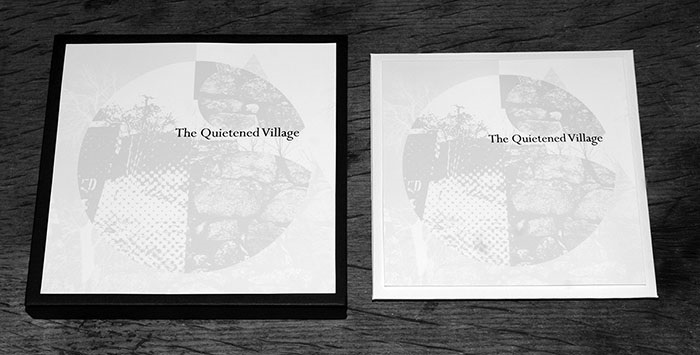
The daily on-line posts from A Year in the Country provided twelve months of eclectic imaginings on the unsettled bucolic a while back and in April comes an album of sonic accompaniment featuring a goodly mix of collaborators, The Quietened Village: "a study of and reflection on the lost, disappeared and once were homes and hamlets that have wandered off the maps or that have become shells of their former lives and times".


Further audio reports from the landscape edge come in the shape of Justin Hopper's poetry and sound project, I Made Some Low Enquiries, featuring none-other than folk legend Shirley Collins and available from the English Heretic website.


Radio has become my day-time company in recent months, through the fountainhead that is BBC iPlayer. Melvyn Bragg curating In Our Time, 6 Music's Freak Zone, Radio 4's aurally-charged production of The Stone Tape, Late Junction eclectica on Radio 3, The Children of Witchwood and old Sherlock Holmes episodes on Radio 4 Extra; the list goes on. Current enjoyment is provided by music journalist Laura Barton's exploration of the relationship between landscape and music across the British Isles in her Radio 4 documentary series, as described further here.


The music of the crags and cliffs of Red Daren and Black Daren is a song of stone. Here in the Olchon Valley is found the geological rim of England as western Herefordshire sheds its Anglo-Saxon facade and bleeds into the Black Mountains of Wales. A recent Sunday morning jaunt amongst the Old Red Sandstone passed through this hushed borderland, climbing to the Hatterall ridge; Hatterall, perhaps, bastardised from At y Heu: 'towards the sun'.   


And back home the summit of my books to read mountain has moved further out of reach with the addition of Time's Anvil: England, Archaeology and the Imagination by Richard Morris, Bloody Old Britain by Kitty Hauser, Anna Pavord's Landskipping, John Lewis-Stempel's Meadowland and The Buried Giant by Kazuo Ishiguro.

Right, back on the Monk's Trod now for me.

Thursday, 2 July 2015

The Way of the Hollow


The work of something of a topographical supergroup, Holloway, is a collaboration between Adam Scovell (film and direction), Robert Macfarlane (words and voice-over), Richard Skelton (music) and Stanley Donwood (artwork).

Robert Macfarlane describes the films genesis and production on the Caught By The River website; its stylistic debt to Derek Jarman's 1971 Journey to Avebury Super-8 short acknowledged and plain to see.

The film moves across many of the touchstones of the re-imagined sense of landscape and place outlined in my recent Towards a new landscape aesthetic essay. And chances are there will be such a holloway - a secret sunken path - within a few miles of where you are sitting right now, so away into the gloaming and find your own layered and folded place...


Thursday, 16 April 2015

Catch Me Daddy - Moorland Gothic


Catch Me Daddy is the rough-edged but searingly memorable debut feature film from music video director Daniel Wolfe, name-checked in Robert Macfarlane's recent Guardian article on The eeriness of the English countryside. In common with other recent hard-hitting 'Brit-grit' films most of the characters are played by non-professional actors, a lineage established by Ken Loach and perhaps an antidote to the high-end thesping of much British input into contemporary cinematic culture.

The naturalistic performances certainly give the work authentic impact, as does the spare and economical dialogue - a mixture of sub-titled Urdu and sometimes abstruse Yorkshire and Scottish accented English. There is also an interesting motif running through the film of narcotic stupefaction: every character has their own constantly consumed opiate, whether that be cannabis, tobacco, cocaine, gin, prescription drugs, high sugar fizzy drinks or a mixture thereof. 


As you may gather, this is a film for which 'not for the faint hearted' is an apt description. In this respect there is a sense of slightly one-dimensional grimness. The remorseless pursuit that is the central narrative has seen the film dubbed a 'Yorkshire Western' but it lacks the light and shade of, say, Shane Meadow's East Midland's revenge-noir Dead Man's Shoes.

What I found most arresting in viewing the film was its acute sense of place. This particularity ensures that it will resonate with anyone familiar with the bleak beauty of the moorlands that encircle the West Yorkshire conurbation of Leeds-Bradford and its satellite (ex) mill towns like a ready made folk-horror film set. The peaty heights of Calderdale and the Dark Peak easily inspire dread and are at once both closely juxtaposed to the towns and cities that their fast-flowing waters created but also in possession of a forbidding otherness that belies their location a few minutes and miles from urban centres. In a post on the nearby Worth valley, I expanded on the regional genius loci: "Its a landscape in which dispersed farmsteads, miles of dry stone walling and pack-horse tracks across the high heather moors share space and time with woollen mill towns and villages battered by the elements and economic decline, and narrow valley floors often crowded with two centuries of communications networks: canal, railway and road".

As essayed in William Atkin's book The Moor (2014), these landscapes have borne witness to dark crimes, uprisings and lawlessness. With these stories and with this character, they have also darkened the topographical exactitude of the writings of the Bronte sisters, of Ted Hughes and Simon Armitage. This specificity of location brings to mind Pawel Pawlikowski's 2004 film My Summer of Love, which also utilises the South Pennines uplands as the setting for an - ultimately doomed - sense of freedom and fleeting enchantment for its young lead characters. Both films have refreshingly strong female leads; an all-too-rare trait shared with West Yorkshire-based Benjamin Myers novel Beastings (2014) which centres on the pursuit of a young women and a baby by a psychotic priest and a mercenary, dead-eyed poacher across the Lakeland fells.   

     
With a finale that is left tantalisingly open and unfinished, yet without compromise or cop-out, Catch Me Daddy packs a punch. It also admirably underscores the reality of inter-racial and inter-cultural interactions - whether positive, everyday mundane or more malevolent - that gives a lie to the rhetoric of irrevocably divided communities in Northern towns and cities.    

Wednesday, 4 March 2015

A Skin Too Few: The Days of Nick Drake


I've recently watched A Skin Too Few: The Days of Nick Drake, Jeroen Berkvens' 2002 documentary that I came across via the Dangerous Minds web site. Like his music its gentle and melancholic, with contributions from his family, friends and fellow musicians. One key voice is Joe Boyd, who produced all three of Drake's albums, the meagre sales of which on release surely contributed to his untimely death at the age of 26. In his memoir of the folk-rock scene of the late 60s and 70s, White Bicycles, Boyd asks: "As the sixties drew to a close, who would have predicted that the end of the millennium would see Nick's music so much more prominent than that of the Incredible String Band, Fairport Convention, John Martyn or Sandy Denny?"    

I was particularly taken by the opening aerial footage of the countryside around his home village of Tanworth-in-Arden. For some reason it had not occurred to me before that this was only a few miles westwards across Warwickshire from Kenilworth, the town where I spent my childhood. Warwickshire is one of those Midland England counties that its easy to overlook: overawed and torn asunder by Birmingham and Coventry at its northern edge, in the shadow of Costwoldian Arcadia to the south. But linger along its tree lined lanes, forded streams, stout middling sort farmsteads and undulating fieldscapes and Warwickshire is quietly memorable and substantial, much like Nick Drake's music. This is, after all, the Forest of Arden of Shakespeare's As You Like It. Here is the full 48 minute film to enjoy:


Rob Young articulates well why Drake has such a hold on those of us (legion now, sadly pitifully few when he was alive) who find his music a particular touchstone for English pastoral melancholia in his treatise on Albion's soundscape, Electric Eden: Unearthing Britain's Visionary Music:
"A former friend and musical partner, Ross Grainger, described Drake as a 'modern pagan' long after his death, recalling conversations about Gaia theory, Stonehenge, ley lines and supernatural forces. Drake's songs may be full of natural images - rain, sun, moon, sky, ocean, sand, trees, roses, thorns etc. - but nature was no panacea either. For Drake, human fate was linked to the relentless round of the seasons - summer bliss must shade into autumnal age and regret; then comes the killing winter. His songs trace eternal cycles, natural revolutions, the turning of the year and the seasons, but with an awareness that repetitive motion can become a treadmill."  

At some stage, when I have managed to justify the outlay as necessary cultural enrichment, I hope to buy a copy of Nick Drake: Remembered For a While, the recently published Drake compendium and artifact. Andrew Ray provides a good flavour of the book on the Some Landscapes blog.

In the meantime, here's a mystical, bosky version of The Cello Song, recorded for the John Peel 'Night Ride' session in August 1969, in which to bask and be transported to the Forest of Arden at dusk, in the company of Orlando and Rosalind, Corin and Silvius:


Monday, 16 February 2015

Towards a new landscape aesthetic

"There is something about walking which stimulates and enlivens my thoughts.  ... my body has to be on the move to set my mind going ... to free my spirit, to lend a greater boldness to my thinking, to throw me, so to speak, into the vastness of things." Jean-Jacques Rousseau  
If I was to sketch out a day spent engaging with landscape and place to realise a wide range of phenomenological experiences and responses of mind, body and spirit - maximum topography - how would it look? Well, in the spirit of Rousseau, it would be an excursion on foot of course (if lacking the epicness of Werner Herzog's trek from Munich to Paris as chronicled in Of Walking in Ice, the ethos of letting oneself drift, 'a falling forward becomes a Walk', would be the same). But not just any walk, variety and unpredictability would be the key. So maybe it would commence in an urban setting; the grittier the better, with the right mix of post-industrial decay and renewal and diverse architectural styles, juxtaposed with a sheen of surface functional banality to expertly peel back, revealing the layered temporal stories behind the bland facade. A detour would be made into a stalwart and defiantly Amazon-baiting second-hand bookshop with a capacious 'topography' section and a number of musty volumes purchased, something antiquarian, something to saviour from the 60s or 70s and a long lost nature writing classic. City would morph into country as suburb, urban green space and anarchic edgeland are navigated - both a route-march along a harsh, litter-strewn and anti-pedestrian roadside and a meander through an oasis of unexpectedly lush and mysterious greenery would feature in this liminal, transitional phase.

As the countryside authentica is reached, guidebook spoon feeding would be disdained in favour of more spontaneous route-finding, perhaps using an antique Ordnance Survey map and attempting to trace nineteenth century topography on the ground. Along the way some reminders of harsh rural realities would no doubt be observed: a sighting of baseball-capped men digging for badgers, improbable fly-tipping, maybe a suspicion of dogging. But a number of viscerally profound moments would also be experienced. Catching the eye of a fox or deer and joining in a lingering stock-still stare. Sensing lives lived and gone whilst rooting around a ruined farmstead or water mill, where unidentifiable rusted ironware or the colours of a cracked tile become refracted relict reminders of the past. A feeling of magic in the air as wind and light switch and shift, changing the mood of the tree- and field-scape. As the gloaming hour approaches and fatigue sets in, having clambered up a rocky stream-bed and scrambled through holloway undergrowth in Rogue Male style, a hill-top clearing would be chanced upon with views over several counties as shadows lengthen across endless fields, as pylons and rail lines and infrastructure become magical objects of gaze. A good place for a night's wild camp. Sleep would be fitful, muffled nocturnal (spectral?) sounds invading thoughts of the day's encounters, accompanied by a soundtrack of wyrd-folk, pastoral electronica and Ralph Vaughan Williams, and readings from Reliquiae (a journal of old and new work spanning landscape, ecology, folklore, esoteric philosophy and animism). 

During the walk ambulatory clear-headedness would provide space for musing on a range of landscape-related topics whilst the miles were clocked-up: the links between the Parliamentary enclosure of common land and present day urban-rural division, how is an innate knowledge of fungi and wild flowers achieved, would Edward Thomas have favoured Nick Drake or the Incredible String Band, and such like. Along the way observations, smart phone photographs of arresting or unusual features and vistas and appropriate quotes from the landscape canon would be tweeted to an eclectic and discerning band of followers; observations and visual representations of the day to be later blogged or instagramed and debated on-line, perhaps included in a talk at a left-field festival, conference or pub social, or even forming part of the content of a crowd-funded book.

     
What would this mash-up journey into landscape immersion represent? Would it just be the ploughing of a mildly eccentric lone furrow? Creating an irrelevant line made by walking in the spirit of Richard Long, ephemeral self-indulgence whilst the real heft of landscape discourse and reality swells elsewhere: local campaigners mobilising against unbidden corporate uniformity or statist grand plans; photogenic academics revealing the results of their research through television series and tie-in book; exciting plans underway for the return of the wolf and rewilding nirvana; hip new ruralistas setting up boutique bunkhouses, offering foraging before breakfast, coasteering followed by artisan bread, craft ale and star gazing. Would this be just another example of a wannabe Self or Sinclair, strong on effort and perspiration but lacking their esoteric vocabulary or ecstatic sneer?

Or is there something in the wind, a fresh approach that this imaginary excursion partly encapsulates and, in fact, also links the other activities cited above. Perhaps not new ideas or concepts (the basics were all birthed in ancient Greece or long before), nothing that could be labelled a movement or a philosophy (the times are too post-modern for anything so quaint); but maybe an emerging coalescing - an alliance - of varied ways of thinking about, of looking at, of experiencing our spatial surroundings; their past, present and future. An antidote to the narrow focus that has often been the Achilles heel of much landscape discourse, characterised by a lack of cross-fertilisation between different disciplines and areas of interest (and often the absence of a feel for the range of emotions that being out in a landscape triggers). An echo of the view of Christopher Milne, searching for a personal philosophy and to find his own path away from his famous father’s shadow as outlined in The Hollow on the Hill, taking a lead from Richard Jefferies who “could be on one occasion the naturalist, observing and recording, and on another occasion the philosopher-poet, sensing and dreaming. One does indeed need to be both, for the one complements and enhances the other”. 

If there is the prospect here of a new aesthetic approach to landscape, then its worth pondering what components, however tangentially, combine to provide its origins, form and quintessence; to trace the foci and ley-line linkages (and talking of the ley, Alfred Watkin's The Old Straight Track (1925) is an example of what we are getting at here. The central ley lines theory of the book is eccentric, discredited, farcical - but that's not the point. As Robert Macfarlane's introduction to the 2014 edition unfurls "... the ley vision - with its mixture of mysticism, archaeology and sleuthing - re-enchanted the English landscape, investing it with fresh depth and detail, prompting new ways of looking and new reasons to walk").

“With this stone and this grass, with this red earth, this place was received and made and remade. Its generations are distinct but all suddenly present.” Raymond Williams
Interestingly, to discover this new vista it is necessary to go back, back to multiple pasts. Landscape as a mirror for reflecting on humanity's relationship with and manipulation of the natural world has deep antecedents; and its the mingling of these temporal layers of envisioning that is of interest here. The late 1960s and early 1970s seem to be a particular touchstone, a launching off point for a more eclectic approach to landscape; and not, I think, just thought of as such because I was born in the midst of this period and have nostalgia pangs for a time that never was as golden as it seems from this distance (my earliest memories of sitting in sunlit meadows are untroubled by the realities of Enoch Powell and industrial strife). Of course, this was a time of seismic societal change in culture, politics and economics, in the way people lived. And contemporary representations and responses to landscape and sense of place reflected this, though at the time without any conscious esprit de corps or awareness of common threads or interest. 

By way of illustration a seemingly amorphous and random collection of landscape aesthetics from the period might include: the sense and scenes of a decaying industrial infrastructure central to films such as Get Carter (1971) and Kes (1969); John Betjeman's televised elegies, in the teeth of the march of modernity, to disappearing or seemingly threatened features of England's architecture and landscape, typified by A Bird's Eye View (1964-1969) and Metro-land (1973); a triptych of cult folk-horror films, reinterpreting themes of a rural pagan past: Witchfinder General (1968), Blood On Satan's Claw (1971) and The Wicker Man (1973); an empathetic, ecologically aware, less sentimental and more anthropomorphic engagement with nature as exemplified by the writings of Richard Mabey and J.A. Baker's book The Peregrine (1967); a new and more accessible discipline of landscape archaeology emerging from its high academia landscape history and historical geography roots, with practitioners such as Mick Aston and Christopher Taylor keen to range between study and field; the pastoral folk rock and psych-folk stylings of the likes of Fairport Convention, Pentangle, Incredible String Band, Waterson-Carthy, Shirley Collins and Vashti Bunyan; and, of course, foregrounded at this time was a general back to the land, 'good life' strand of counter-cultural hippiedom. All are examples of reinterpretation or reappropriation of the past in a time of great change, sometimes in a somewhat reactionary or idealistic way, often breaking new ground.


It is perhaps only with the passing of time that the paths between these varied perspectives can be navigated and identified as a loose network; a pattern that can be plotted and pieced to provide some kind of cohesive narrative. And a rich seam revealed at the heart of this new landscape vision is the heuristic weirdness just below the surface of even everyday and seemingly tamed terrain - Deep England (and Deep Wales, Deep Ireland, Deep Scotland, and, well, Deep anywhere). Back to the 70's polestar and two cultural artifacts, from many examples, serve to illustrate. The 1974 BBC Play For Today Penda's Fen, written by David Rudkin and directed by Alan Clarke, is now much exalted, talked and written about; remarkably so given that it is not available on DVD and so rarely seen. A British Film Institute release with comprehensive and thoughtful accompanying booklet has become de rigueur for such treasures and will surely come. In the meantime impatience has been salved by the publication of a pamphlet, The Edge is Where the Centre Is, marking a rare screening of the film in 2014 on the anniversary of the death of the Ango-Saxon King Penda in AD 655. Found within is a synopsis of the story by Rudkin himself, which could serve to represent and encapsulate many of the themes essayed here:
"In the pastoral landscape of Three Choirs England, a clergyman's son, in his last days at school, has his idealistic value-system and the precious tokens of his self-image all broken away - his parentage, his nationality, his sexuality, his conventional patriotism and faith...
Below the slopes of the Malvern Hills, he has encounters with an angel, and with a demon, with the ghost of Elgar, the crucified Jesus, and with Penda, England's last pagan king. In the final image, he turns away from his idealised landscape, to go into a world and adulthood with a value-system more anarchistic now, and readier to integrate the contradictions of experience."
David Gladwell's film, Requiem For A Village (1975) has received the BFI treatment. As with Penda's Fen, and with echoes of William Blake and William Morris, Requiem is a meditation on societal change in the countryside that combines, in Rob Young's words, "the contradictions of an English radical tradition in which opposition to the encroachment of 'the scrape' (ie capitalistic development) is instinctively aligned with a more conservative will to preservation" with "an attempt ... to show the coexistence of all things in time". The images in the film of the bodies of villagers from previous generations rising from the grave, reawakening the village past, are a reminder of the supernatural and hauntological undercurrents that have always effected perceptions of the landscape: "we had eyes for phantoms then". A theme also taken up at the time in television productions such as The Owl Service (1969), based on Alan Garner's influential book of the same name, Robin Red Breast (1970) and Children of the Stones (1977).


Once this terrain has been surveyed and mapped, other features and relics that provide signal traces, from before and since, can be unearthed, excavated and added; the layers enriching the sense of commonality and communion. Who would be the historical Arch-Druids that have formulated this stratigraphy? An irrelgular yet inspiring collection of mystic topographers, antiquarians, Utopians, visionary poets, folklorists, landscape historians and archaeologists, and proto-psychogeographers; often linked by their divergence from accepted norms and doctrines. 

Musing on landscape is as old as humanity - countless un-named, unknown shamen and sears must have held their tribes in thrall with vivid stories and imagery inspired by the flora, fauna and topography of their surroundings long before even Vergil and the Classical poets came on the scene with their flourishing tales of magick, milieu and mind: "Happy too the man who knows the gods of the country, Pan, and old Silvanus, and the sister Nymphs". Through dark days and into the Renaissance the flame was carried by the likes of John Leland, driven to madness by his topographical quest; Gerrard Winstanley and the Diggers of St George's Hill, their doomed attempt to establish a 'Common Treasury' of land for all; and Sir Richard Colt Hoar and the empirical antiquaries "speaking from facts not theory", birthing archaeology whilst pillaging barrow and chapel.

Friday, 29 August 2014

The Epic of Everest: 'Still climbing - and then, no more'

Image courtesy of www.bfi.org.uk
I have finally found time to watch the BFI’s new release of The Epic of Everest, the contemporary film of the 1924 British Mount Everest Expedition, directed by Captain John Noel, who accompanied George Mallory, Andrew Irvine and the rest of the party on their – ultimately doomed – third attempt to scale the world’s highest peak. Appropriately, it is a breath-taking piece of work.

This is a fairly instantaneous reflection, which will hopefully inspire anyone who has not seen it to seek out this ninety minute masterpiece. Once again, BFI have done a superlative job of restoring, packaging and sound-tracking this, now ninety year old, artifact of another era. They seem to have an endless conveyor belt of such gems: Here's a Health to the Barley Mow, BBC Ghost Stories for Christmas, From the Sea to the Land Beyond, Robinson in Ruins ... the list goes on.


The initial scene-setting intertitles of the film are 'of their time' in conjuring up a context for the expedition based not just on the mountaineering challenge, but articulated through the language of empire and conquest, of battling against nature to subdue it. This was a time when the conceit that the natural world was something to be tamed was at its zenith; we now kid ourselves that we know better, whilst seemingly unable to pull back from this (unstoppable?) sham. However, as the film progresses, the original on screen commentary, written by the director, becomes more impressive, substantial and somewhat spiritual; the words of someone who bore direct witness to the events as they unfolded, sparsely dramatic and often poetic: "Into the heart of the pure blue ice, rare, cold, beautiful, lonely - into a fairyland of ice". 


Expertly restored, the antique frames - seemingly, like their subject matter, antediluvian - have an otherworldly quality entirely suiting the epic images of ice and cordillera on screen, surely more so than the technically superior results of modern day filming. This feeling is enhanced by the colour washes (blue, purple, red) applied to some of the frames. The hues producing a dream-like sense that evokes the Antarctic Gothic of HP Lovecraft's At the Mountains of Madness, as well as the imagery from the pioneering days of Victorian Alpinism reproduced in Fergus Fleming's Killing Dragons: The Conquest of the Alps and Robert Macfarlane's Mountains of the Mind: haunting precipices, corniced ridges, looming towers of ice, endless glaciers.

Still from The Epic of Everest (Image courtesy of www.bfi.org.uk)

Noel, in the words of Wade Davis in the film's accompanying booklet: "a soldier by profession, but an artist in spirit", was a pioneering and highly innovative photographer and film-maker. The technology and equipment utilised to produce the film was both state-of-the-art and ingeniously deployed, enabling footage of unprecedented clarity to be shot from up to three miles away. Particularly striking are the circular telescopic stills that intersperse the film. These were created using a powerful telescope clipped to his camera and synchronised with the lens so that the image of the telescope appeared in the aperture. The imagery that these frames bring to mind is of an even higher realm than the five and a half miles that Everest stands proud of sea level; we could be looking at the lines etched into the moon seen through a high powered telescope gazing out to space.


The film would be spell-binding enough if silent but is brought to life ever more vividly by the new score composed by Simon Fisher Turner. Perfectly pitched, the soundtrack lithely shape-shifts from sparsely beatific piano-led sections to appropriately ominous strings (like Godspeed You! Black Emperor at their most portentous) mirroring the epic build of the images; whilst at times melting into a drone-like murmur of echoing sound-effects: creaking ice, the noise of ropes secured and pitons hammered home, yak bells. Musically the film takes a startling turn as it tracks Mallory and Irvine's ill-fated attempt on the summit; reaching 28,000 feet they attain the outer limit of human breathing and reluctantly resort to oxygen gas. At this point we hear the heavy, laboured breathing of oxygen masks, the sound of pioneers of a different frontier in Kubrick's 2001: A Space Odyssey. Human breath then mutates into emerging elemental tumult: a sonic apotheosis reached in a roaring crescendo evoking a soundscape of avalanche and approaching storm, constructed by multi-tracking internet storm recordings from Everest and elsewhere; a fitting coda to, in the words of John Noel's on screen commentary,: "The historic climax of our adventure - glorious because of the marvel of attainment - sad because of the tragedy of death".

Mallory and Irvine were last seen by fellow climber Noel Odell, who placed them at 28,400 feet, above the Second Step - a 40 metre wall of exposed rock and the most technically difficult barrier before reaching the summit. "Still climbing - and then, no more" reads the commentary. The last shots of the mountain are red tinted as cloud shadow slowly envelopes the immensity of the rock and ice; darkness overcoming the light.  


The cult of Mallory and Irvine has continued to inhabit our imagination ever since, an endless expedition into the mountains of our mind; ironically in many ways eclipsing the evidenced first ascent of Everest by Edmund Hillary and Tenzing Norgay thirty years later (not helped by the pragmatic New Zealand persona of Hillary; his prosaic account of the record-breaking ascent, High Adventure, makes it seem anything but). The most intriguing mystery in mountaineering history remains: did they fall or collapse before reaching the summit or after it was attained? Tantalising evidence of the possibility that the climbers of 1924 had reached the summit was found during the 1999 Mallory and Irvine expedition, which – sensationally – found Mallory’s body within hours of its commencement. Jake Norton, the American mountaineer who was part of that and subsequent research expeditions believes that they probably did reach the summit before, in unimaginable exhaustion, they followed the wrong gully and Mallory fell to his death, leaving Irvine alone and stranded to perish in the impossible cold during the night. Norton's fascinating theory (and he admits it can only be guesswork) on what may have happened can be found on his The MountainWorld blog site.  

The expedition party: Irvine, first left on back row, and Mallory, second left (Image courtesy of blog.mountainworldproductions.com)
Although the futility of the deaths of the two climbers (and others who also died during the expedition), particularly so soon after the horrors of the Great War, is hard to comprehend there is, when following the party's progress on screen, an aura of residual nobility; surely the incendiary spark for the Everest fever that has grown ever since. All we see here contrasts quite strikingly with the current commercial imperatives that dominate activity around Everest, which seems to revolve around enabling appropriately rich, though often inappropriately skilled or fit clients, to 'reach their goals'; sucking away at the mystique of this sacred landscape, filling it with both real and metaphysical pollutants. All the while risking death and disfigurement. 'Because its there' sounds a hollower call to arms by the year. But perhaps this is over romanticising. The 1924 attempt was supported by a huge logistical effort, with over 500 people involved and camps strung out along fifteen miles of glacier above the base camp at 17,000 feet (the limit of the range of the main means of transportation, the yak). All this enormous effort cost money and a large part of the process of getting to the mountain, as now, was raising funds from wealthy sponsors and backers. It is also difficult to avoid the conclusion that Mallory in particular had become so obsessional about reaching the summit that he had drifted into a form of madness in which all else, including his family, was disregarded. In his history of the often fatal fascination that mountaineering can weave, Mountains of the Mind, Robert Macfarlane poignantly recounts the moment that Mallory's wife and three young children received the telegram of his death.   

The film also stands as an ethnographical record of the peoples of Tibet and Nepal and their way of life before outside influences started to seep across the scene. Here we see monks, sherpas and nomad shepherd communities, their dress and customs, and dependence on the yak. A patronising tone occasionally creeps into the commentary ("We cannot call them a musical race...") but generally the footage is left to speak for itself. Most striking is the image of the fortress monastery of Kampa Dzong ('The Shining Crystal Monastery', surely a psych-rock album title in waiting), looming into shot like a Crusader castle in the twelfth century Kingdom of Jerusalem. The Llama from the monastery had wished the expedition well but predicted that the spirits guarding the mountain (known as Chomo-Lung-Ma in Tibet: 'Goddess Mother of the World') would oppose their endeavour, and by the end Noel wondered whether this had come to pass.

The combination of ground-breaking use of film and photography - both still in their infancy as art forms, the unrivalled drama of the setting and the multiple narratives culminating in tragic yet heroic death make this an unmissable document of modern humanity's long climb to, what - conquer? understand? meet with? nature at its most raw and unforgiving. After the climactic last view of Mallory and Irvine before they disappear from view and in one of his final sections of on screen commentary, we get the feeling that Noel has left behind the bombast of imperial conquest as he muses: "We must think of ourselves and of nature. We spring from nature. In life we defy her, at death we return to her. We, who are so little, and nature who is so immense!".    

The last shot of Mallory, Irvine and the summit party from The Epic of Everest before they disappear from view (Image courtesy of www.bfi.org.uk)

References

Davis, W, 2011. Into the Silence: The Great War, Mallory and the Conquest of Everest. Vintage. 

Fleming, F, 2000. Killing Dragons: The Conquest of the Alps. Granta.

Hillary, E, 1956. High Adventure. The Companion Book Club.

Macfarlane, R, 2003. Mountains of the Mind: A History of a Fascination. Granta.

Nelsson, R (Ed.), 2007. The Guardian Book of Mountains. Guardian Books.

Tyndall, J, 1906. The Glaciers of the Alps and Mountaineering in 1861. Dent.


Traer, M. A tale of two men and geology on the roof of the world. http://web.stanford.edu/group/anthropocene/cgi-bin/wordpress/the-naked-elements/