Friday, 25 January 2013

Finding wildness: places to be left alone with yourself

A common leitmotif of writings and commentary on landscapes - both urban and rural - is that wildness, and nature itself, is on the retreat; clinging on in only a few hard to find redoubts. Received wisdom has it that in crowded overdeveloped Britain, and particularly in England, wild, little visited places are 'increasingly' hard to find: there is no escape from the all-pervasive noise, speed and stress of the man-made technologies that we have created. We are now enslaved by the forces that have also impoverished our environment. Rachel Carson's prophecy of a Silent Spring has come to pass, with absent natural sound replaced by the pandaemonium of the machine age.
"Two great wars demanded and bequeathed regimentation, science lent her aid, and the wildness of these islands, never extensive, was stamped upon and built over and patrolled in no time. There is no cave in which to curl up, and no deserted valley." E.M. Forster
"...that cavernous, deadened heart of south England which now runs more or less uninterrupted from Norwich all the way to Bristol." Mark Cocker
"This is one of the few places left in England where you can actually open your ears and listen. Everyday we are bombarded by sound and noise, but so rarely have the opportunity of really listening." Chris Watson
Even Robert Macfarlane, in his generally uplifting paean to The Wild Places, gives the impression that only a skilled landscape horse-whisperer such as he is able to locate special places of wildness:
"The losses to the wild places of Britain and Ireland were unignorable, and the threats that they faced - pollution, climate change - appeared greater in number and vigour than ever before. But I knew that the wildness had not entirely vanished."
The credo of exclusivity and a diminishing stock of remote places is taken up by Christopher Walton:
"Even in England there are still places where it is possible to feel as if you are the first to stand there. These places are few and far between, lost deep in the hills where nobody ever goes, or hemmed in by humming railway lines; but if you look hard...you will find them."


What puzzles me about much fine writing on landscape, as illustrated above, is that it seems to ignore or be in denial of a simple truth: remote places are all around and do not require arcane or esoteric knowledge in order to be enjoyed; just a map and a bit of curiosity. Maybe celebrating the remarkable, diverse and accessible geography within our midst is too far from the overriding narrative of shrinking biodiversity, ruptured ecosystems, climate change and urbanisation; fiddling while Rome burns.

My contention would be that if people feel that wildness has gone, been corralled into carefully stage managed nature ghetto's or is simply out of bounds, then how can we ever expect them to feel a sense of value for the areas of natural tranquility and beauty that surround them? And, by extension, feel a personal - rather than abstract - stake in pulling back from the pillage of the planet's natural resources? 


So here is a gently dissenting voice; a hosanna to exploring and revisiting special places:
"On springy heath, along the hill-top edge/ Wander in gladness, and wind down, perchance/ To that still roaring dell, o'erwooded, narrow, deep/ And only speckled by the midday sun." This Lime-Tree Bower My Prison, Samuel Taylor Coleridge


Monday, 14 January 2013

Pandaemonium begins

Fine map that neatly shows the (literal) powerhouses and important landmarks of the beginnings of the Industrial Revolution in Britain.

And, as an accompanying piece, Humphrey Jennings' Pandaemonium 1660-1886: The coming of the machine as seen by contemporary observers is an absolute treasure trove of writings on the 'sturm und drang' of the coming of the industrial age.

Thanks to Matthew Ward for the image, from "an old text book".

Sunday, 13 January 2013

Mapping the Old Straight Tracks

Ley lines are not for me as a credible theory but, like ghost stories and other esoteric and arcane ideas, for a rationale observer who is open to a bit of subversion they hold an undoubted appeal. Alfred Watkin's Old Straight Track is a lovely book and a topographically detailed description of the places and sites the book covers. And the maps of the ancient landscape around Glastonbury shown here (beautifully produced by Palden Jenkins) are certainly striking, with an alluring dissonance between the seemingly rational geometry of the ley lines and the more organic and messy reality of the physical and historical topography.


Thursday, 10 January 2013

Dial Garreg: A story of stone


Dial Garreg: the Revenge Stone.


The remains of the cross commemorating the murder of Richard de Clare, Marcher Lord, in 1136.

In 1136 Richard had been away from his lordship in the early part of the year. He returned to the borders of Wales via Hereford in the company of Brian Fitz Count, but on their separating, Richard ignored warnings of the danger and pressed on toward Ceredigion with only a small force. He had not gone far when on 15 April he was ambushed and killed by the men of Gwent under Iorwerth ab Owain and his brother Morgan, grandsons of Caradog ap Gruffydd, in a woody tract called "the ill-way of Coed Grano", near Llanthony Abbey, north of Abergavenny. Today the spot is marked by the 'garreg dial' (the stone of revenge). Wikipedia.


Tuesday, 1 January 2013

A midwinter hand-list


The Leaping Hare

Its the time of year when my pile of 'on the go' and 'to read' books reaches a critical mass, boosted by Christmas presents; a tipping point from which I will not be able to catch-up, but will enjoy trying.

Currently sustaining me through the winter months are:

J.A. Baker's The Peregrine; a hawk-eyed and visceral account of bird, man and landscape.
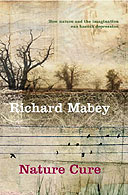
Nature Cure by Richard Mabey
Richard Mabey's Nature Cure muses far and wide in chronicling his personal resurrection from depression through a reconnection with the natural world.
Pandaemonium By: Humphrey Jennings
Humphrey Jennings Pandaemonium 1660-1886: The coming of the machine as seen by contemporary observers is an eccentric miscellany of reportage and opinion on the seismic shift caused by Britain's Industrial Revolution; and part inspiration for London's Olympic Opening Ceremony.


And for dipping into on a stormy night, The Oxford Book of  English Ghost Stories (Michael Cox and R.A. Gilbert, Eds.).


I'm also particularly looking forward to:

After London - Richard Jefferies 

Dark Mountain Issue 3 - Various

Headwaters: Walking to British river sources - Phil Clayton

Land of Lost Content: The Luddite revolt, 1812 - Robert Reid 

The Art of Wandering: The writer as walker - Merlin Coverley

The Daylight Gate - Jeanette Winterson

The English Lakes: A history - Ian Thompson

The Great God Pan - Arthur Machen

The Leaping Hare - George Ewart Evans and David Thomson

The Living Mountain - Nan Shepherd
 
Who I Am - Pete Townsend

Why Willows Weep: Contemporary tales from the woods -
Various

Wolf Solent - John Cowper Powys
 And with no plans to re-boot to a Kindle, the house will continue to be populated with erratic-like piles of books awaiting discovery.

Tuesday, 18 December 2012

Ash: the shaggy signs of Pan


Despite the obvious seriousness of the current ash dieback outbreak, I have to admit to having observed the crisis with a certain ambivalence towards this tree. However, today, walking the wooded combe's of the South Cotswold scarp, I was struck by how much ash is the dominant tree species in this landscape. Any significant loss of ash would radically alter the topographical character of the area, and the many others across Britain where it is similarly ubiquitous. Let us hope that the famed resilience of the ash, adaptability and quick growth offer some sort of resistance to the Chalara fraxinea fungus.


My walk began, appropriately enough, in the hamlet of Cold Ashton. And, stark and winter-bare, ash was the constant coda throughout the nine muddy miles: a knarled old pollard defiant in a field; dominating the hanging woods on the hillsides and the hedgerows of field and stream.  

Majesty lurks in the scruffy ugliness of the ash, summed up nicely by Roger Deakin: "There is something goat-footed about ash trees: the shaggy signs of Pan". But the utilitarianism of ash is its star quality, "its workmanlike resilience, foreshadows its practical virtues". William Cobbett cuts to the quick: "Laying aside this nonsense, however, of poets and painters, we have no tree of such various and extensive use as the Ash...It therefore demands our particular attention and from me, that attention it shall have". 


So here's to the æsc ('spear' tree) and Yggdrasil ('World tree'), my constant companion on a benign winters day; and a tree not to be taken for granted. And lets hope that the words of Edward Thomas' poem 'The Ash Grove' prove to be prescient: "...But the moment unveiled something unwilling to die/ And I had what most I desired, without search or desert or cost."


...not forgetting the oak
...and the holly and the ivy

Bibliography

Cobbett, William, 2001 Rural Rides. London: Penguin

Deakin, Roger, 2007 Wildwood: A journey through trees. London: Penguin

Rackham, Oliver, 2001 Trees and Woodlands in the British Landscape. London: Penguin 

Thomas, Edward, 2004 Collected Poems. London: Faber and Faber


Tuesday, 11 December 2012

Local topographies and vaster worlds: Hunters in the Snow


Cycling to and from work today, through a frozen, sub-zero landscape, I have been drawn into my favourite landscape painting, Pieter Bruegel the Elder's Hunters in the Snow.

The picture is one of a series of panels, completed in 1565, representing the activities of Flemish peasant communities during the changing seasons (and symbolising December and January). This calendar-based cosmology was a common motif in medieval art, rooted in religious iconography; but Bruegel and his contemporaries were the first to crystallise such scenes of interacting nature and humanity into what would later become the established genre of 'factual' landscape painting, encompassing "...both local topographies and vaster worlds..." (Cosgrove, 2008).  

Art historians also find interest in the work as an early example of the use of perspective in landscape painting:
"Our eye roams from a high vantage point over an extensive, diverse landscape that develops from the cultivated foreground area to an ever wilder nature in the distance. Principle lines direct the eye along a diagonal that begins with the houses on the left, accentuated by a stark row of bare trees, and extends to the lower right, into the valley. Only there, where it runs up against the mountain barrier and takes the opposite, diagonal direction towards the plain extending left to the horizon, is a sense of depth created which counters the dominant horizonal of a panorama" (Wolf, 2008).
On a broader historical note the painting presents stark evidence of the severity of winter throughout the so-called Little Ice Age, a period of comparatively lower global temperatures during the post-medieval/ early modern period. 
     
Self portrait of Bruegel, who died in 1569, aged 44
For me though, the fascination of this picture is its representation of 'real' people and their day-to-day activities in a living, naturalistic landscape; in the words of Kenneth Clark "the expression of an all-embracing sympathy with humanity...in which the accidents of human life are one with the weather and seasons. Few works of art are less in need of commentary". No figures here from heroic mythology or religious representations of ecstatic joy or demonic pain and damnation. There is real empathy with the hunter's and their dogs returning, weary from a day in the woods and fields. 

And each viewing spotlights a different element of small detail: the inn sign hanging precariously from its awning; the frozen water-wheel; the people, young and old, playing various games on the iced-over ponds; the snow-covered bramble in the foreground and the various breeds of dog in the pack accompanying the eponymous hunters.

The framework for these scenes within a scene is the expertly realised combination of the sturdy-looking buildings of the village (no rude hovels here), the blue-grey of the wintry sky and frozen watercourses, the skeletal woods and trees of the foreground, middle and far distance and the all-pervading whiteness of the snow. To me the only wrong note (a weakness it seems of many landscape artists) is the depiction of the distant high ground as ludicrously precipitous crags; this remember is Flanders!

Other less well-known but no less interesting pictures in the 1565 cycle include:


The Gloomy Day (February-March)


  The Hay Harvest (June-July)
 The Corn Harvest (August-September)
The Return of the Herd (October-November)

Select Bibliography

Andrews, Malcolm, 1999 Landscape and Western Art. Oxford: Oxford University Press


Clark, Kenneth, 1966 Landscape in Art. London: Pelican

Cosgrove, Denis, 2008 Geography & Vision: Seeing, imagining and representing the world. London: IB Tauris

Shama, Simon, 1996 Landscape and Memory. London: Fontana 

Wolf, Norbert, 2008 Landscape Painting. Cologne: Taschen

Saturday, 1 December 2012

River Song - ecstatic landscapes of the mind

Dennis Wilson Pacific Ocean Blue Album Cover 
River Song, the opening track on Dennis Wilson's solo album Pacific Ocean Blue personifies a yearning for a more simple relationship with the natural world. Perhaps only an illusionary late 60s to mid 70s chimeric proposition, and perhaps over-romanticised by someone like me, born into this period  (who has just watched a documentary on Wilson on BBC4).
The lyrics when written down (see below) are simple, almost banal; but on record, with Wilson's cracked yet soulful vocals, gospel choir backing and lush production, the song  cries out to soundtrack our universal desire to run away to, misquoting Werner Herzog, "ecstatic landscapes of the mind". 

Over to You Tube: 
 
Walkin' down by the river
Water running through my knees
River, oh river moves so free
Oh mighty river endlessly

Oo mighty river
I would love to be like you
Oo lonely river
Has not got the time to say

I was born into the city life
It's all that I've ever known
You know it's rough gettin' round this place
So crowded I can hardly breathe

You can only see about a block or two
In L. A. that's the truth
I'm lookin' for some country life
Some kickin' room no more city life
I want the river

Rollin' rollin' rollin' on river
(I got to get away I got to get away I got to get away)
Rollin' rollin' rollin' on river
(I got to get away I got to get away I got to get away)
Rollin' rollin' rollin' on river
(I got to get away I got to get away I got to get away)
Rollin' rollin' rollin' on river
(I got to get away I got to get away I got to get away)
Rollin' rollin' rollin' on

It breaks my heart to see the city
I wonder why it ain't pretty
Oh I want to cry, want to cry
Come on you've got to do it do it do it

You got to run away you got to run away
You got to do it do it do it
You got to run away
You got to run away

You got to do it do it do it
You got to run away
You got to run away

You got to do it do it do it
You got to run away
You got to run away

You got to do it do it do it
You got to run away
You got to run away


Saturday, 24 November 2012

A triptych of ruins, carved into the landscape

The Castle: medieval Redcastle?

"Red Castle, in Welsh Castell-coch, was a small manor at the lower end of the Hattrel Hill above Tre-wyn. I have failed to find any court rolls or details of this manor. A cottage on the mountain above Tre-wyn is called The Castle." (Bradney, A History of Monmouthshire, 1907).

Knocking around tumbledown ruins on steep and exposed hillsides in all weathers may not be everyone's idea of a good time but it works for me.

"Splendid this rampart is, though fate destroyed it
...tumbled are the towers,
Ruined the roofs, and broken the barred gate,
Frost in the plaster, all the ceilings gape,
Torn and collapsed and eaten by age..."
The Ruin (Anonymous)

In researching the landscape around Llanthony Priory over recent years I have been particularly drawn to three ruined upland farmsteads and enclosures that may, or may not, have had a common relationship with the Priory during its 400 year period of activity up to Dissolution in 1538:
  • The Castle (SO317236) - potentially the foci of the Priory's manor of Redcastle;
  • The Old Abbey (SO268337) - a distinctive system of fields near the head of the neighbouring Olchon valley;
  • The Castle (SO247327) - a postulated contemporaneous holding up valley from the Priory. 

The hypothesis that I am exploring is whether the sites were all granges, forming a key element of the agricultural infrastructure of the Priory. Granges were newly established outlying farming complexes set up by monastic houses outside of the traditional manorial system to exploit waste and other lands newly brought into economic use and worked by conversi (lay brothers). They tended to have a lasting impact on the landscape because they were “…often higher and more remote than ordinary settlements of the same period and so maintained a frontier of relatively intensive land use” (Simmons, 2001).

The Priory managed approximately 20,000 acres of land locally in the Monmouthshire/Herefordshire borderlands, including large tracts of upland moorland 'waste', known as the Honddu Slade estate. The primary documentary sources for the estates of Llanthony do not specifically identify any granges here, although they are in evidence in the Priory’s extensive Irish estates. The study of monastic granges tends to focus on the Cistercians who developed the model, which was then taken up by other orders although rarely recorded for Augustinian houses such as Llanthony. Where granges have been associated with Augustinian monasteries they have tended to be relatively close to the house, reflecting the order’s limited use of lay brethren and the need for the canons to run the farm themselves.


My aim has been to explore the physical landscape evidence, so far through some preliminary fieldwork; compare the 'patterns of the past' found here with known grange sites connected to other monastic houses, and, if my hunches seem to have any credence, revisit the documentary records.

Thursday, 8 November 2012

Avebury Stone Circle: 'an uncanny landscape'


I'm currently enjoying the BFI box set of BBC Ghost Stories for Christmas. Mostly adaptations of classic M.R. James stories, they provide perfect fireside viewing on a winter's night. However, the 1977 offering, Stigma, has a different tone to most of the other instalments in the series.The booklet that accompanies the box set includes an essay by Helen Wheatley that places Stigma in a contemporary 'British folk horror' oeuvre:"As the British film historian Peter Hutchings has noted in his analysis of uncanny landscapes in British film and television, there was a cycle of television dramas around the 1970's, including The Owl Service (Granada, 1969), The Stone Tapes (BBC2, 1972), Children of the Stones (HTV, 1977) and Quatermass (Thames, 1979), which featured megaliths at their centre and which 'represent ancient landscapes where humans are compelled the repeat actions from a distant history, either real or mythological, in a manner that effaces not just human agency but also modernity itself as a social force'." The setting for both Stigma and Children of the Stones is Avebury Stone Circle in Wiltshire and the surrounding landscape, liberally peppered with Neolithic monuments including the enigmatic Silbury Hill and West Kennet Long Barrow. An 'uncanny landscape' is an apt description for this area and its easy to see why it was chosen as the location for these tales of the supernatural. So, if you haven't seen these programmes, fascinating snapshots of a particular landscape, time and genre, take a look at the YouTube video and still below.Stigma:


The Children of the Stones:


Select bibliography

Barron, R.S., 1976 The Geology of Wiltshire: a field guide, St Albans: Moonraker Press

Bord, Janet and Colin, 1974 Mysterious Britain, St Albans: Paladin

Cope, Julian, 1998 The Modern Antiquarian London: Thorsons

Cunliffe, Barry, 1993 A Regional History of England: Wessex to A.D. 1000 London: Longman

Darvill, Timothy, Stamper, Paul and Timby, Jane, 2002 England: An archaeological guide Oxford: Oxford University Press

Fowler, Peter and Blackwell, Ian, 2000 An English Countryside Explored: the land of Lettice Sweetapple Stroud: Tempus 

Hippisley Cox, R, 1973 The Green Roads of England London: Garnstone Press

Hutchings, Peter, 2004 'Uncanny Landscapes in British Film and Television' in Visual Culture in Britain, 5:2, Winter 2004, pp27-40

Rainbird, Paul (Ed.), 2008 Monuments in the Landscape Stroud: Tempus

Wheatley, Helen, 2012 'Stigma' in Ghost Stories: Classic adaptations from the BBC, BFI box set booklet